In the course of our work here, I like to call out books and articles that I feel are worthy of praise, usually the in the course of a particular post or issue. After a too-long stay on the corner of my desk awaiting time to read it, I finally finished a book published last year that should be an essential for any collector, or lawyer dealing with clients across borders. Entitled The Art Collecting Legal Handbook (Thomson Reuters), the book is edited by Bruno Boesch and Massimo Sterpi, both notable European practitioners in art and cultural affairs law, at Froriep in London and Studio Legale Jacobacci & Associati in Rome, respectively.
0 Comments Click here to read/write comments
Topics: Legislation, the Middle East, looted property, Forgery, Auctions, VAT, Studio Legale Jacobacci & Associati, authenticity, London, Sam Keller, Julien Anfruns, droite de suite, Froriep, Moral Rights, Europe, North America, Holocaust claims, California, Fondation Beyeler, Howard Kennedy FSI, Thomson Reuters, Asia, Rome, Restitution, International Council of Museums, Massimo Sterpi, United States, World War II, Sabina von Arx, 1970 UNESCO Convention, Morgan Stanley, Art Fairs, Publications, Litigation, due diligence, Immunity from Seizure Act, Museums, Bruno Boesch, 1995 UNIDROIT Convention on Stolen or Illegally Ex, Daniel McClean, New York
Like a bad 1980s movie, the most infamous copyright decicion of the year has now spawned a sequel. The Ninth Circuit Court of Appeals has been considering since early March whether to rehear en banc its decision in favor of Cindy Lee Garcia concerning her performance in the movie Innocence of Muslims. Plaintiff Cindy Lee Garcia, one of the actresses in the video, claimed that she had no idea what the movie was to turn out to be when she performed her scenes, and that the Islamophobic audio had been dubbed over whatever she actually said when filming. She then sued, arguing that her performance was an independently copyrightable work, such that the producers needed her permission to distribute and reproduce it. The complaint was universally disregarded by copyright experts when it was filed. This reaction was so nearly unanimous because Garcia’s performance (which, it was later learned, had been denied registration by the Copyright Office) seemed clearly to be a work for hire, or a joint work—if Garcia’s performance even met the other requirements for copyright.
0 Comments Click here to read/write comments
Topics: registration, Innocence of Muslims, Gaylord Flynn, Mark Youssef, Copyright, Cindy Lee Garcia, Fair Use, Copyright Office, Google
Volunteer Lawyers for the Arts has organized an interesting panel presentation and discussion on October 14, 2014 that will be held at Herrick, Feinstein LLP in New York. From the event description (online registration available):
0 Comments Click here to read/write comments
Topics: David Freudenthal, Pearlstein and McCullough, Volunteer Lawyers for the Arts, iGavel, Michael McCullough, Saving Africa’s Elephants Changing the Art Scene, Frank Lord, US Fish and Wildlife Service, Christie's, Hartley Waltman, Carnegie Hall, Events, ivory ban, Herrick Feinstein LLP, Craig Hoover, Lark Mason, Customs, New York
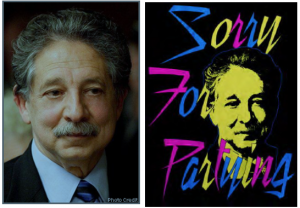
Much ink has been spilled over the new world order seemingly announced by last year’s Second Circuit decision in Prince v. Cariou with regard to copyright, fair use, appropriation art, and “transformativeness.” In a nutshell, while roundly criticized, most commentators have taken the Prince decision to announce the apotheosis of “transformativeness” among the fair use factors in § 107 of the Copyright Act. Prince looked at the four statutory factors and applied them in such a way that to be considered “transformative” was to qualify for fair use. Most troubling was the “know it when you see it” character of the opinion. The Google Books opinions took a similar view.
0 Comments Click here to read/write comments
Topics: Richard Prince, Cheshire Cat, Copyright Act, 17 U.S.C. §106, Seventh Circuit, Prince v. Cariou, Mifflin Street Block Party, Google Books, Campbell v. Acuff Rose, Wisconsin, Sorry for partying, Madison, Copyright, Kienitz v. Sconnie Nation LLC, Judge Frank Easterbrook, First Amendment, transformativeness, Fair Use, mayor Paul Soglin, 17 U.S.C. §107
After months of bitter fighting over the so-called Grand Bargain to infuse the Detroit bankruptcy with hundreds of millions of dollars from (among others) the State of Michigan, the Community Foundation for Southeast Michigan, the Kresge Foundation, the Ford Foundation, the John S. and James L. Knight Foundation, the William Davidson Foundation, the Fred A. and Barbara M. Erb Family Foundation, the Hudson-Webber Foundation, the McGregor Fund, and the Charles Stewart Mott Foundation to keep the collection of the Detroit Institute of Arts out of discussion for any sale or use as collateral, the Grand Bargain’s fiercest opponent has announced an agreement with the city and the withdrawal of its opposition to the plan of adjustment. This does not completely put an end to discussion about the role of the DIA collection, but for all intents and purposes it will likely be the last of any proposal to collateralize or sell the artwork. The episode also provides a lesson to practitioners about the cost of overzealousness.
0 Comments Click here to read/write comments
Topics: the Ford Foundation, Chapter 9, the Fred A. and Barbara M. Erb Family Foundation, Syncora Capital, the Hudson-Webber Foundation, the John S. and James L. Knight Foundation, the William Davidson Foundation, Financial Guaranty Insurance Co., Judge Rhodes, Christie's, valuation, Appraisal, Detroit, the McGregor Fund, Eugene Driker, Detroit Institute of Arts, Bankruptcy, Gerald Rosen, the Kresge Foundation, the Charles Stewart Mott Foundation, eligibility, Detroit Bankruptcy, the Community Foundation for Southeast Michigan, grand bargain
As I have before, I wanted to mark the third anniversary of this blog since we posted three articles on September 15, 2011. In the last year, you (the reader) have helped the Report grow beyond our most optimistic hopes. We have done our best to cover significant events like the Gurlitt saga and restitution issues, the Detroit bankruptcy and the Detroit Institute of Arts, the Corcoran Gallery merger, auction houses and privacy in New York, the Beastie Boys GoldieBlox and copyright/fair use, the “flea market Renoir” case, and so much more. Our monthly traffic in year three has almost surpassed the readers in all of year one, and the sky is the limit. As always, the goal remains to present a fresh perspecive on these legal issues affecting the visual arts and its institutions, of use and interest both to the lawyer and non-lawyer alike.
0 Comments Click here to read/write comments
Topics: Deaccession, Gurlitt Collection, Cy Pres, the Art Law Report, Gurlitt, Restitution, GoldieBlox, Copyright, Detroit Instiute of Arts, Corcoran Gallery, Beastie Boys, Detroit Bankruptcy, Fair Use
Having presumably gotten all of us to take the bait, appropriation artist XVALA has backed off and announced that he will not include versions of hacked photographs of Jennifer Lawrence, Kate Upton, and others, in a show entitled “No Delete.” The show will instead include, apparently, “the artist’s self-shot, life-size, nude images.” So, there’s that.
0 Comments Click here to read/write comments
Topics: The Showroom, reddit, No Delete, Jennifer Lawrence, Florida, Jeff Hamilton, Kate Upton, Cory Allen Contemporary Art, photo hack, XVALA, Copyright, Fair Use, Warehouse Arts District
After the 1998 Washington Conference on Holocaust Era Assets and the eponymous Washington Conference Principles on Nazi-Stolen Art that came out of it, it is hardly surprising that a recurring theme has been to assess the progress of those nations that participated and signed on. Equally unsurprisingly, those assessments are usually more anecdotal than empirical, and usually arise out of a particular case or cases in the context of that country’s response.
0 Comments Click here to read/write comments
Topics: Graham Bowley, Macedonia, Netherlands, Terezin Declaration, Mussolini, Latvia, Dr. Wesley A. Fisher, Hungary, ICOM, Bulgaria, Commission for the Compensation of Victims of Spol, Germany, Bavarian Minister of Culture, Nazi-looted art, Die Welt, Belarus, Lex Gurlitt, Washington Conference on Holocaust Era Assets, France, Dr. Ruth Weinberger, Romania, Baron Mor Lipot Herzog, Winfried Bausbeck, Belgium, Slovakia, Vichy, World Jewish Restitution Organization, Bundesrat, Washington Conference Principles on Nazi-Stolen Ar, Gurlitt, WJRO, NS Raubkunst, Restitution, International Council of Museums, Norway, United States, Luxembourg, Looted Art, World War II, St. Petersburg, Poland, beschlagnahmte Kunst, Ukraine, Austria, Serbia, Conference on Jewish Material Claims Against Germa, Italy, Bosnia, New York Times, Monika Grütters, Slovenia, Estonia, Museum and Politics Conference, National Gallery, Museum of Fine Arts, entzogogene Kunst, Czech Republic
For students following the various issues we cover here, there is an exciting opportunity next winter. Registration is now open for DePaul University College of Law’s 2015 National Cultural Heritage Law Moot Court Competition in Chicago on February 27-28, 2015. The competition is open to twenty-six two- and three-member student teams from ABA-accredited or provisionally accredited law schools. Schools may register up to two teams.
0 Comments Click here to read/write comments
Topics: National Cultural Heritage Law Moot Court Competit, Moral Rights, Visual Artists Rights Act of 1990, VARA, Morag Kersel, 17 U.S.C. § 106A, Copyright, Lubna El-Gendi, First Amendment, Depaul Center for Art Museum & Cultural Herita, Patty Gerstenblith, Fifth Amendment
The Supreme Judicial Court, the high court of the Commonwealth of Massachusetts, has answered a certified question from the Bankruptcy Court about the interpretation of Massachusetts’s fine art consignment law, G.L. c. 104A. The case, Eve Plumb et al. v. Debra Casey, SJC-11519, originated with an art dealer’s bankruptcy and the claim by the trustee in that bankruptcy that the artwork in the dealer’s possession belonged to that bankrupt dealer, not the artists. The SJC has interpreted the 2006 amendments to the law for the first time and clarified the roles of everyone involved. In full disclosure, I did some work for two of the artists (Dylan Stark and Robert Stark) at an early phase of the Bankruptcy Court proceedings. Eve Plumb, now an artist but also well known as the actress who played Jan Brady on The Brady Bunch, was another of the artist-claimants. In sum, once an artist delivers a work of art for sale for the purpose of exhibition or sale, it is a consignment, and the seller/consignee holds it in trust for the artist, regardless of the consignee’s own circumstances.
0 Comments Click here to read/write comments
Topics: Legislation, consignment, United States Supreme Court, The Brady Bunch, Jan Brady, Allyson Wynne, Commonwealth of Massachusetts, Debora Casey, Supreme Judicial Court, SJC, Bankruptcy, Wynne Fine Art Inc., Eve Plumb, Bankruptcy Court, consignor, G.L. c. 104A § 2, Kenneth Wynne III, G.L. c. 104A § 1, U.C.C.-1 statement, U.C.C. Secretary of State, Chatham, Chapter 7, Uniform Commercial Code, certified question, Dylan Stark, Robert Stark, Eve Plumb et al. v. Debra Casey, Jim Grace, SJC-11519, Arts and Business Council